For the seven of us and our two guides, we needed four mototaxis. We thought was funny that the taxis passed each other. Kate kept leaning out of the taxi she was in which worried us some. I think if she could have ridden on top, she'd have loved it.
 This is the view from the mototaxi. Notice there are no cars on the road, only mototaxis and motorcycles.
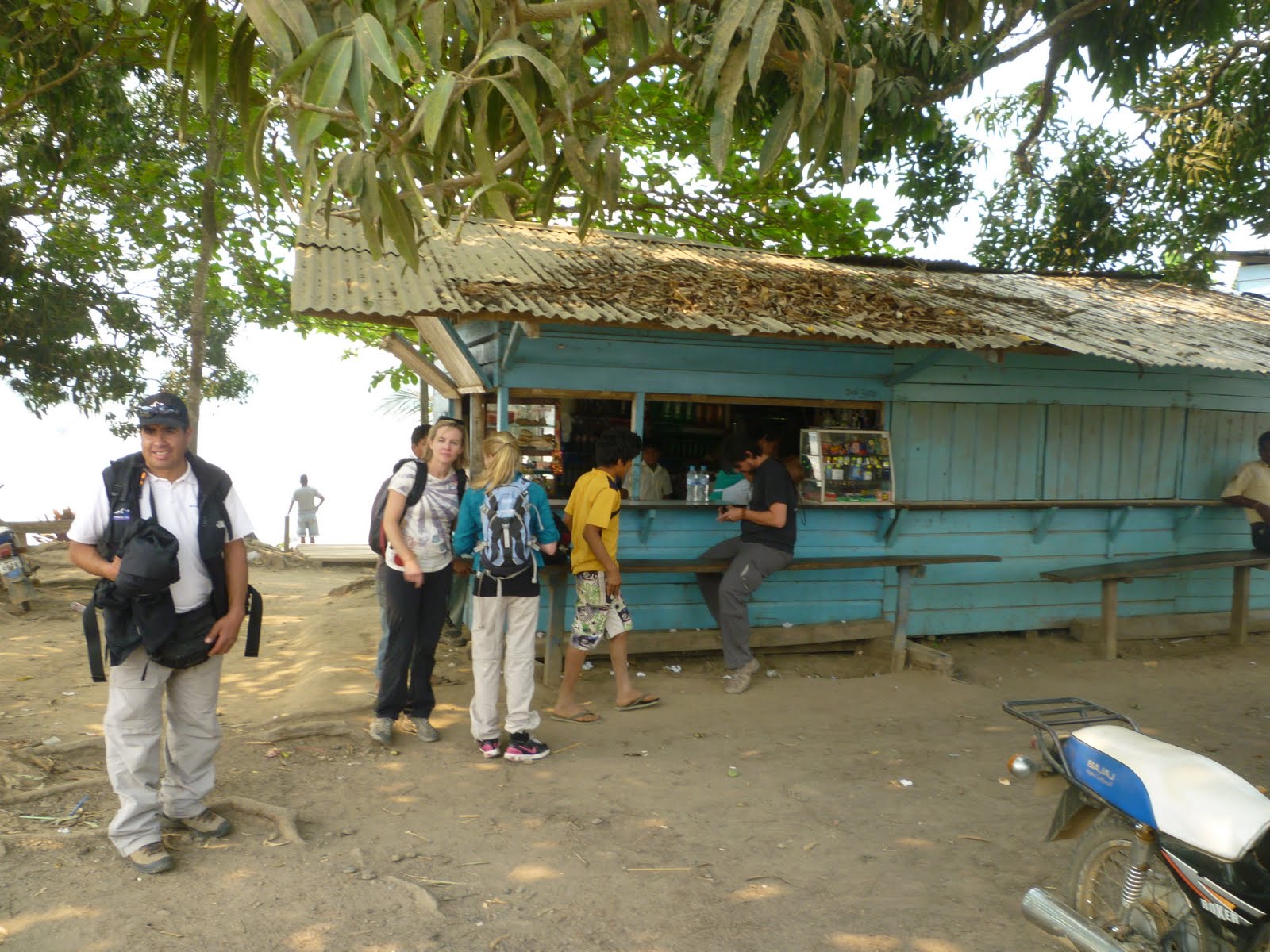 The muddy Sandoval River is just behind the refreshment shack. We bought the last 8 bottles of cool water the owner took from the refrigerator, a camping ice chest. Javier, our Quechua guide and owner of Moroni Tours, bought us all gaseosas or soda pop as well. Then it was goodbye to civilization and life on the river and in the jungle. Margaret wanted a jungle experience but even she had no idea how rough it could be. How could any of us have known?
 This picture puts a new meaning to the family car. We passed other families on motorcycles but I was able to get this shot from the mototaxi.
 We traveled about two hours on the Sandoval River until we reached the lake entrance to the Mehia Family Lodge. This is the dock where we left the boat to hike into the lodge. Javier had told us it was a 45-minute hike--yeah--for teens and seasoned hikers. We hiked twenty minutes to a way station, a kind of visitors' center, where we registered and read about the flora and fauna. Then we hiked another two hours on heavily rutted roads caused by heavy rains.
 On the last day on the Sandoval River we traveled upriver about two hours to a reserve where a North American and bought some property and created an educational center and reserve for rehabilitating animals, mostly abandoned wild monkeys, tapers, macaws, and other large birds. One of the most fun things was this canopy reachable by a rope ladder. Even Dad, he who is afraid of heights, climbed the ladder and walked above the jungle--200 feet up and across.
 This is a picture of Ted on the canopy. Everyone but me did the canopy. I stayed behind in a chair hammock and slept. I didn't even miss the family! It was a consensus of Dad and the guides that I shouldn't attempt the climb or the canopy because of my ankle. I really appreciated the hour-long nap.
 This was our view for the two-hour ride up river to the animal reserve. Actually, we passed several gold mining barges, some more sophisticated than others. The least sophisticated was the one-man operation diver who panned for gold just off shore. We wondered if he was aware of the caymen, the pirahnas, and sting rays that hang out just off shore...

These pictures are not quite in order. This is the beginning of the path to the mouth of the lake where we boarded another boat. Our guides paddled probably 45 minutes to reach the dock to the lodge.
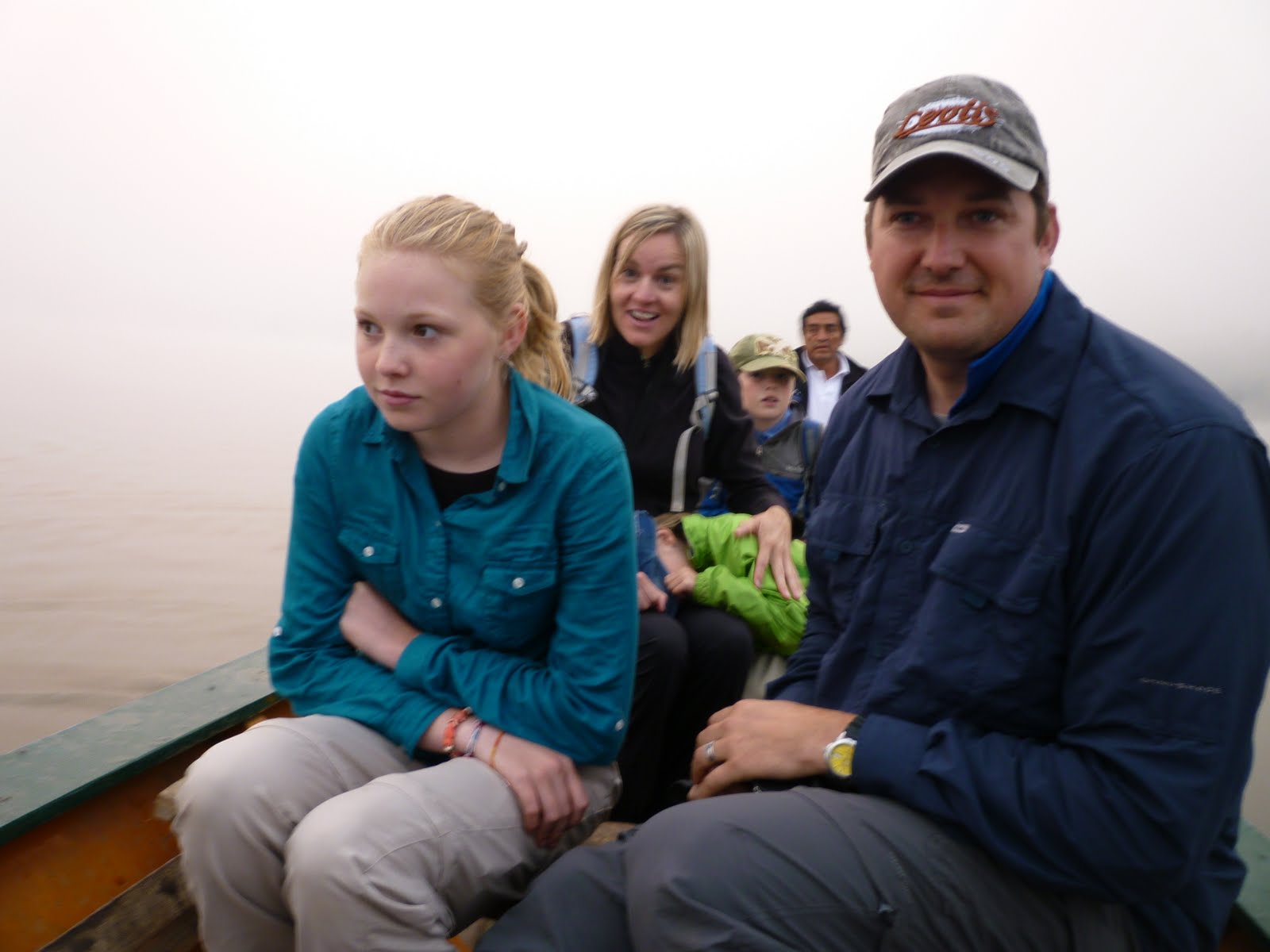 I love this shot! Hernan, our Quecua guide, who knew these parts well, is at the back. Emma's face reads a bit of "when will this boat ride end. We all were a bit apprehensive on the ride to the lodge. What did make the trip interesting was the water birds and shore scenery.
 One of the days we tied up to a dock for a walk into the jungle to see the largest tree in the forest. It was a short, wonderfully interesting walk. The next few pictures are shore shots.

 You can see the bird just to the right of center. The bird looked like a turkey buzzard, but it was not. I wish we had written the names of all the creatures we saw. No one had a pen or paper handy.
 When we first boarded the boat which really reminded me of "The African Queen" at Puerto Maldonado, Hernan gave us all lunch made by his wife, a rice tamale filled with a chicken mixture and wrapped in banana leaves. It was really flavorful, but the amount of rice in each "package" could have fed a family of four.
 The brightly colored, hand made hat is from the hotel in Puno. Was I ever glad I bought that!
 Spencer asked Hernan to catch a pirahna for him. No problema! Hernan and Javier put meat on the end of a piece of twine, dropped it into the water just off shore and in five minutes Spencer had his fish. Mean looking thing for sure, but Hernan assured us they don't attack swimmers in a frenzy. He says that's "Hollywood."
 Speaking of mean looking things, look at all the spider nests at the base of this tree. I took this picture from the boat and was happy we weren't on shore. When we were walking through the jungle at the reserve, Hernan coaxed a tarantula out of it's hollowed out log nest with a long flexible stick he made after stripping off the leaves. The tarantula was as big as my hand and very hairy. He was also perturbed to have been disturbed.
 This is one of the birds we saw from the canoe. We saw whole families of turtles hanging out on drift wood or tree trunks which protruded into the lake. They were hard to get on camera because the dropped into the water at the first sign of man or paddle.

This is one of the two huge trees we made a special stop to see. Spencer is standing against a root of the tree.
 You can barely see the large ants hard at work. There is an ant under this leaf which the have somehow scissored off. Another ant is along for the ride.

This is a better shot of the ants hard at work. Notice how big they are. They are poisonous, but they are also edible!
 Hernan and Javier led us into the deep jungle from this path to show us macaws and other in the wild.
 The ride up the river to the lake was really scenic. One island was just big enough for one person and maybe a pup tent. We wondered if it were for sale. Probably it was owned by ants and tarantulas who wouldn't want to sell property to man.
 We're none the worse for wear here as we travel out of the jungle to return to Puerto Maldonado.

Both nights we were at the Mehia Family Lodge, Hernan and Javier took the kids, Margaret and Ted and Stuart cayman hunting. I stayed behind because the stairs down to the water were rickety enough in the daytime much less at night. I was using a walking stick by then and was keenly aware how easy it would be to fall. My ankle was really stressed by the time we got to the jungle.
Everyone was directed to shine their flashlights against the shore. Green eyes shone back at them. Hernan paddled over to the shore, stuck his hand in and brought up a cayman by the nape of his neck. As long as he had the cayman by the back of the neck, it couldn't lash out at him. The kids loved it.
 We loved being out on the canoe late in the day when the shadows were long. This is a scenic shot we passed going on and coming from side trips.
 We shot this picture to have an example of the large canoe we were on while at the lodge and on the lake. We traveled upriver on Hernan's larger boat.
 This is the trecherous path from the lodge to the river. You can see how hard it would be to navigate it by night.
 Bless Ted! He walked me up the steps the last night. We were all dragging.
 This is the point at which we enter the jungle. We are with Javier, our guide and owner of Moroni Tours located in Cusco. He joined us in the jungle because he loves being there. We flew from Cusco to Puerto Maldonado in 35 mintues. He took an overnight bus to save money!
 This man passed us at quite a clip. He had provisions for the Mehia Family Lodge.
 Javier and Hernan had tied up the canoe and were on their way up to the lodge for dinner. About the lodge--I don't know why I didn't take pictures of the screened building where we ate breakfasts and dinners. The sleeping cabins were just that--two single beds against two walls, mosquito nets over each bed, a candle and matches. No nails or hooks to hang coats or clothes on. The bathrooms were one-room, one potty shacks. The shower was so dirty we didn't shower for three days. The grounds were dirt and plants, actually not bad. The family lived in a shack at the back of the eating hall. We think the chickens we ate were running around earlier in the day. We don't know where the beef came from. The meals were simple but good. We were worried about the limonada offered, but the owner assured us the water had been boiled. We drank hot herb tea morning and night, really delicious and comforting.

Stuart and I are sitting on the parasite plant or roots. Eventually this "tree" will strangle the massive one above us. I guess it's an example of the survival of the fittest in the jungle.

This is a fun Jeffries Family foto. Emma, Spencer, and Kate climbed all over these roots. One tree had a thick vine that they swung from just like Tarzan.
 Behind Margaret, Ted, and Kids is the departing point into the jungle and up the river to the Mehia's. This picture was taken the day we left the jungle. The two hour hike out to the river seemed much longer than it was the day we walked in. Oh, by the way, on this tributary, we saw a dead sting ray. Anyone want to go swimming?
 One of the big birds was hanging out on the path to the lodge.
 The jungle debris on the dirt dock had to be swept each day by a young fellow who looked an awfully lot like a North American Indian. It wasn't too far upstream we saw the dead sting ray,
 This is the first picture we took entering the narrow water way to the lake. What could lie beyond, we wondered. Well, we had a true jungle experience, not the easiest, the conditions not the best, but it was a fine adventure. We all wondered if Walt Disney had stayed at the Mehia Family Lodge before creating his Jungle Adventure for Adventure Land.
 We loved being out on the canoe late in the day when the shadows were long. This is a scenic shot we passed going on and coming from side trips.
 We shot this picture to have an example of the large canoe we were on while at the lodge and on the lake. We traveled upriver on Hernan's larger boat.
 This is the trecherous path from the lodge to the river. You can see how hard it would be to navigate it by night.
 Bless Ted! He walked me up the steps the last night. We were all dragging.
 This is the point at which we enter the jungle. We are with Javier, our guide and owner of Moroni Tours located in Cusco. He joined us in the jungle because he loves being there. We flew from Cusco to Puerto Maldonado in 35 mintues. He took an overnight bus to save money!
 This man passed us at quite a clip. He had provisions for the Mehia Family Lodge.
 Javier and Hernan had tied up the canoe and were on their way up to the lodge for dinner. About the lodge--I don't know why I didn't take pictures of the screened building where we ate breakfasts and dinners. The sleeping cabins were just that--two single beds against two walls, mosquito nets over each bed, a candle and matches. No nails or hooks to hang coats or clothes on. The bathrooms were one-room, one potty shacks. The shower was so dirty we didn't shower for three days. The grounds were dirt and plants, actually not bad. The family lived in a shack at the back of the eating hall. We think the chickens we ate were running around earlier in the day. We don't know where the beef came from. The meals were simple but good. We were worried about the limonada offered, but the owner assured us the water had been boiled. We drank hot herb tea morning and night, really delicious and comforting.

Stuart and I are sitting on the parasite plant or roots. Eventually this "tree" will strangle the massive one above us. I guess it's an example of the survival of the fittest in the jungle.

This is a fun Jeffries Family foto. Emma, Spencer, and Kate climbed all over these roots. One tree had a thick vine that they swung from just like Tarzan.
 Behind Margaret, Ted, and Kids is the departing point into the jungle and up the river to the Mehia's. This picture was taken the day we left the jungle. The two hour hike out to the river seemed much longer than it was the day we walked in. Oh, by the way, on this tributary, we saw a dead sting ray. Anyone want to go swimming?
 One of the big birds was hanging out on the path to the lodge.
 The jungle debris on the dirt dock had to be swept each day by a young fellow who looked an awfully lot like a North American Indian. It wasn't too far upstream we saw the dead sting ray,
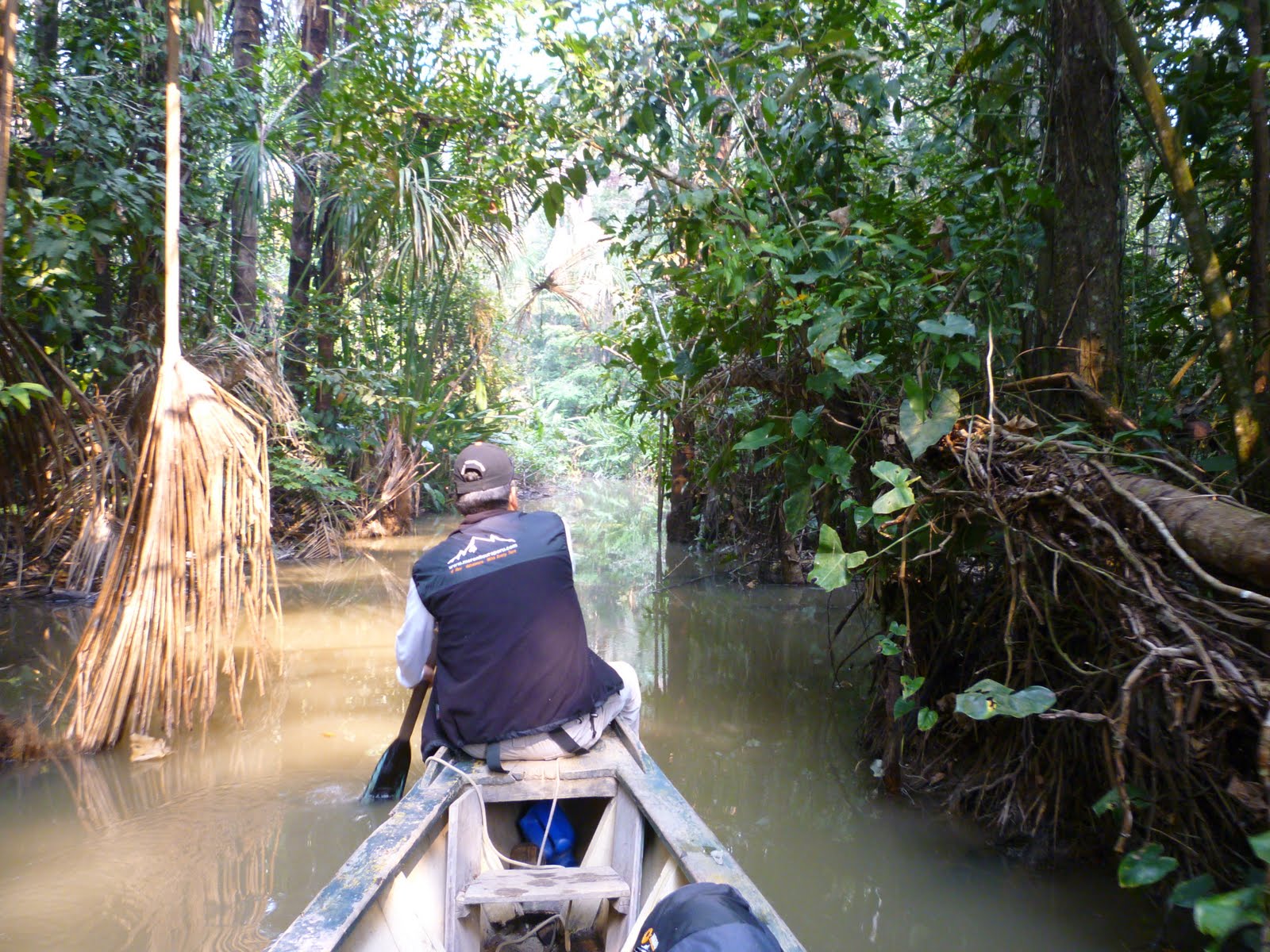 This is the first picture we took entering the narrow water way to the lake. What could lie beyond, we wondered. Well, we had a true jungle experience, not the easiest, the conditions not the best, but it was a fine adventure. We all wondered if Walt Disney had stayed at the Mehia Family Lodge before creating his Jungle Adventure for Adventure Land.