Saturday, May 8, 2010

A small plane adventure

Dad and I flew to Santa Cruz Bolivia on Monday, May 3rd, at the invitation of the mission president and his wife. Santa Cruz is a city of rings: the inside rings are the down town, prosperous families, high end stores, high rise apartment and office buildings, flowering trees and landscaped parks. The outside rings are poorer areas. In the 8th ring is a sugar factory which was burning while we were there because squatters had taken it over and burned the office building. Fortunately, for the sugar company, the squatters were forced out before they burned the factory. The night we arrived, we could see flames. For the four days we were there, we could see smoke. Only the offices were burned. In the meantime, sugar could not be found in stores for a few days.


The city itself is quite picturesque with its red tiled roofs, flowering trees, clean streets, and blue skies. The temperature and air reminded us very much of Hawaii during the winter months--absolutely delightful.


Like the view above, this view is from the mission home balcony which extended from the living room area to the bedrooms. We could watch planes land at the municipal airport just five minutes from the mission home which is on the eleventh floor of a high rise apartment building. The international airport is about a 45 minutes drive. We flew in and out of that airport, but our biggest adventure was the flight to Jacuiba, Bolivia, on an 18-seat plane which flew in and out of the municipal airport. We could look down onto the runway and see our little plane parked at the airport.


Wherever there will be a captive crowd such as the airport, there will be an ice cream man...


and the fruit stand and salesperson. We saw several wheelbarrow fruit stands in Bolivia.


This picture is a fun study in black and white, totally unintentional (for us Hermanas), for sure. We had just landed back in Santa Cruz and were walking back into the terminal of the municipal airport. Even I was wearing a version of black and white--a charcoal grey skirt and cream sweater.


So much is done by manual labor in South America. There are no tractor-driven baggage carts here, just a man with a strong back.


This picture shows how small the plane is--one seat on each side, seats very close together, and little headroom. Even I couldn't stand up straight.


The plane was so noisy we put cotton provided by the airlines in our ears. One fun thing about flying in a small plane is that the plane flies at a low enough altitude we could see the country clearly. We flew over the lush green mountains from Jacuiba into Argentina and on to Santa Cruz, Bolivia. We were amazed how quickly the tropical landscape of Bolivia changed to the brown pampa of Argentina.


This map shows the Santa Cruz mission area. If you can see Santa Cruz in the middle right of the map, follow the map to the right corner or the southwestern border of Bolivia and Argentina. Jacuiba is on the border, a 15-minute walk into Argentina. We were told it was very dangerous to cross into Argentina because of the drug trade.


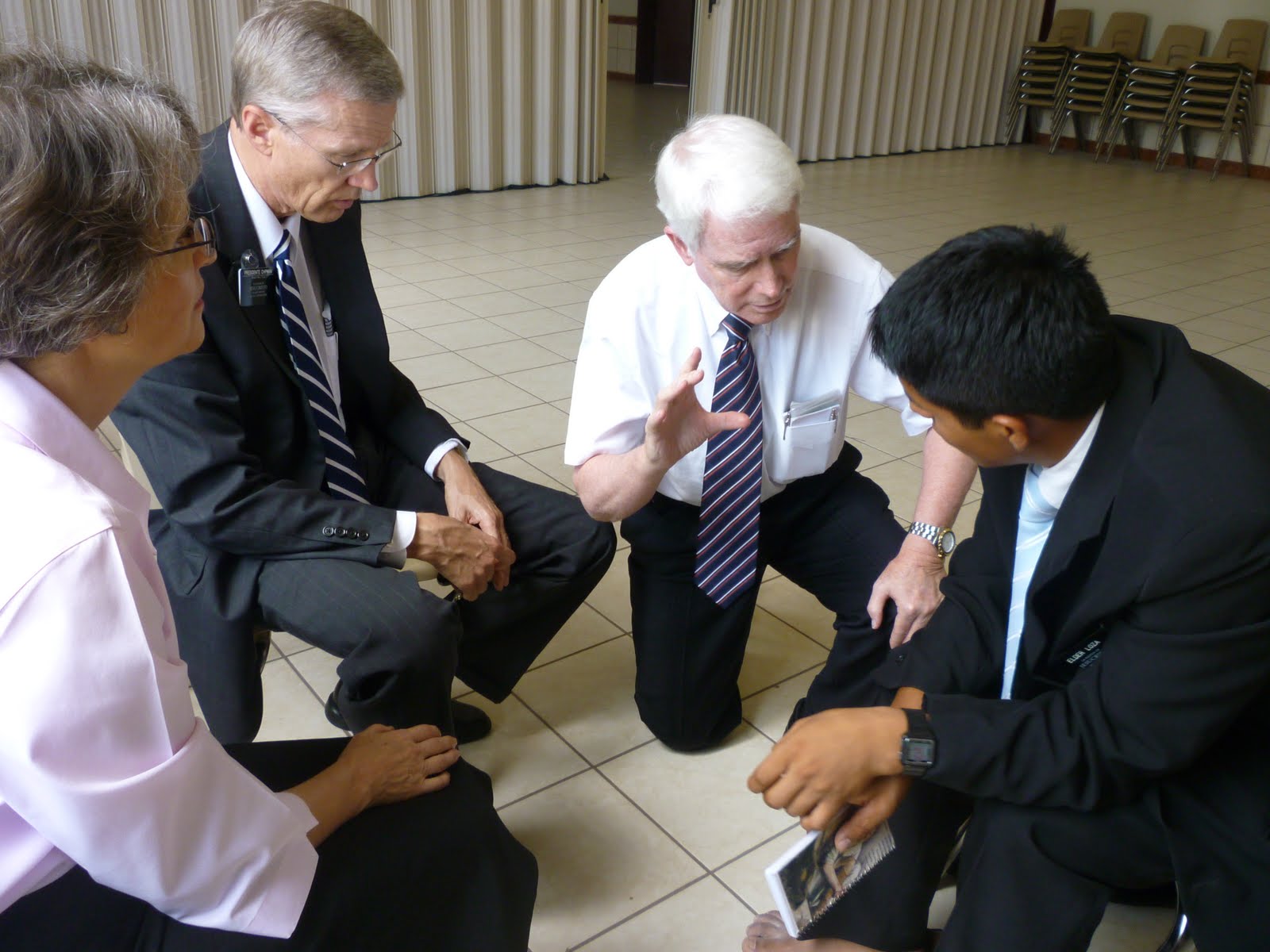
These are the office Elders and APs who were with us for the five days. The Elder next to me is from Santiago de Chile and speaks very good English. Two Elders are North Americans. The taller one is from Argentina and the Elder on the left is from Peru.


Sunday, May 2, 2010

A Day trip to Cieneguilla


Saturday, May 1st, Jack and Kay Beals and Dad and I took the opportunity to visit a mountain village about thirty minutes east of La Molina. The Beals have attended church here a few times and knew the bishop well. They wanted to take him and his wife out to lunch in Cieneguilla. The bishop knew of a restaurant/resort with folk dancers, a live band, and musica de Peru. The name of the restaurant is Mesas de Piedra, tables of stone.


Nothing grows on the cerros or even the "country side" if one can call it that. Anything green is hand watered or watered with water trucks. This stand of eucalyptus trees is one of several stands along the road. In the West we think the foothills are dry and barren, but they are green by comparison to the brown rock and dirt cerros of Peru. It rarely rains. It does not rain in Lima; it mists.


This is one of many settlements along the road to Cieneguilla. We were told that neighborhoods or settlements like this one sprang up quite quickly when the terrorists were active in Lima in the 80s. Notice some are made of cardboard and tin. Others are made of a reed-like material also used for fencing. Most houses are made of hand made adobe and painted bright colors.


This fellow was one of the dancers who entertained us throughout our dinner. His hat is made of pieces of leather sewn together with leather laces. We were surprised how heavy the hat was.


Look at the size of the trout. It was perfectly seasoned. The yellow potato is a common side dish served without butter or salt and pepper. On every table is a selection of sauces, some mild, some wickedly hot. The sauces take the place of butter, salt and pepper.


The costumes are so colorful. The young women are really beautiful. The young men are guapo. There were probably twenty dancers who danced throughout the four pavillions of serving tables.


We were greeted by an Inca king and his maidens bearing smoking clay pots. One of the pots had a small piece of fragrant burning wood.


One of the dancers is a member of the bishop's ward. We really enjoyed meeting them. They loved posing for a picture.


In this case a picture is worth a thousand words. A professional photographer was also taking pictures. We were surprised he let us in on the action and let us take pictures at the same time. The costumed greeters invited us to join them for photo. Now we wonder where our picture will turn up. Maybe in a magazine or on a brochure?


This is just one of many brown dirt and rock cerros we passed driving to Cienegilla. The same scenery is here in La Molina and houses are built right into the rock.


On the way out of town, I saw this sign. Cienegilla is the name of a mosquito of which there are many because of the river. The blue sky is such a change from the gray, cloudy skies we have most of the time. It's a rare day we have full sun here because of the proximity of the coast and the fact that Lima is in a bowl, much like the Wasatch Front. However, the Wasatch Front has more sunshine. The Lima fall has been sunnier than the summer was.


Thursday, April 29, 2010

When a Child is Born, so is a Grandma

On the refrigerator is a magnet which reads, When a child is born, so is a grandmother. Lily Jane is our ninth grandchild. She is a beauty. When Ben and Jenny asked if I could come help with Jordan and Lily, I was grateful to be asked and excited to visit their little family in Las Vegas. I had permission to leave the mission field.
Lily has a happy disposition. She smiles. No one can tell me that's "gas."


Jordan is also a beautiful little girl and a gentle, helpful, and kind big sister. We had great fun playing in the back yard, eating picnic lunches on the patio, reading together, feeding the ducks, and sketching on her easel. She can count to 20, recognizes the letters of the alphabet, and she can sing the alphabet song and the Primary songs.


Thank you, Ben and Jenny, for two wonderful weeks of grandmothering.


Saturday, April 3, 2010

A Little Sight-Seeing Close to Home

Dad, Gabriela, our driver, Luis Cedeno, our medical connection in the Chile Vina del Mar Mission office who was visiting us from Ecuador, and I are standing on the patio outside the cocina or kitchen of the 15th Century estate of a Quechua noble.


Pots like this one were used for burial "caskets" and for hauling all kinds of grain, water and seeds. In La Molina pots like these are used for planters. We have been told some of them come from excavations of ancient tombs. The clay pot industry here is quite lucrative. We have yet to find where they are sold.


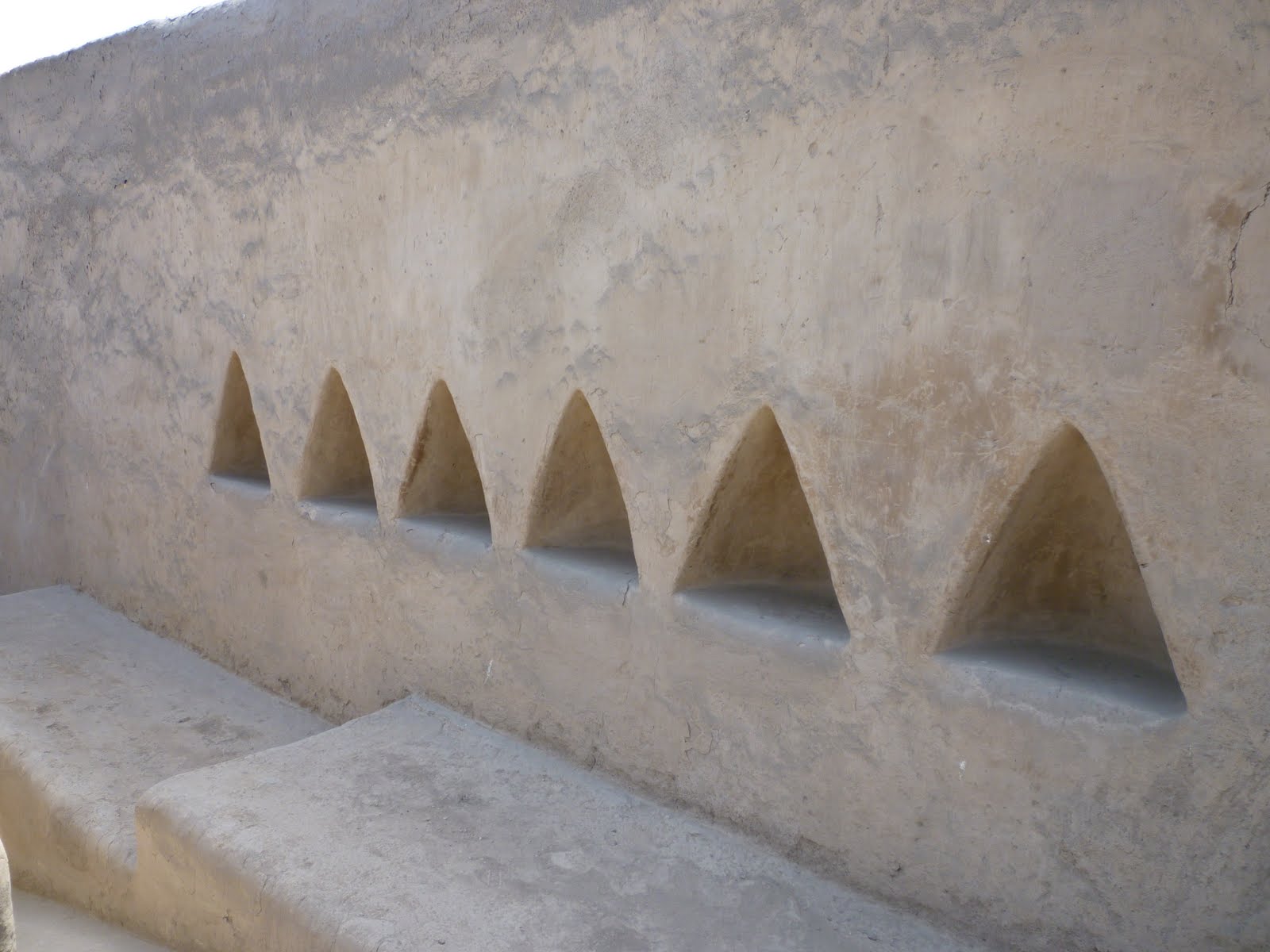
These first three pictures are random. I added them after I had created the blog. This room shows one of the bedrooms or living quarters. There is no evidence of a roof. There are windows for light and air, and the triangular shaped cut out on the left is a niche for placing some kind of object.


Not quite five miles from our apartment building is the 15th Century estate of Purochuco, the estate of a noble, one of the Quechua people. At the time the Inca was the most powerful ruler in all of South America. The Inca's empire stretched from Ecuador to Chile. Cuzco was the seat of the empire. We have been wanting to visit this site since we first heard of it early in our mission. When Luis Cedeno, a friend from Ecuador came to visit us, we decided to ask our driver to take us. We were greeted by a Peruvian hairless dog.


I included the picture below to show where the archeological site is located. We are looking east from our apartment study window. The hill in the background is about where the site is located.


The ancient Quechua people were advanced in science--harnessing water, telling time, and telling the seasons by how the light hit these niches. In a sense this is an Inca calendar.


This is the parade ground, a place for the noble to receive goods for trade, to address his people, to hold large gatherings--a town square.


The noble had slaves to work the cotton fields and take care of the llamas. There is evidence they grew the cotton which they made into clothing which they sold and traded. The woman knew the arts of carding, spinning, and weaving, using various looms which were on display in the visitors' center. There were pictures depicting the sheering of the llamas.


The picture below shows the natural colors of the cotton grown on the land. There were also pictures of the estate, the farmlands, the cotton fields, and the llama pens.


This room, an outside patio, is just off the kitchen. Dad and Graciela, our driver and friend from the LaMolina Ward, are looking down into a deep granary. The holes indicate a roof covered the grain to protect it from the elements.


This room was the kitchen. The people used a mortar and pestle to crush the grain, but it was also used as a blender. Liquids were added to the corn.


In the picture below we are standing outside the kitchen on the patio used for gatherings and meals. Our guide told us there is evidence cooked food was brought in. Interesting! From here the noble could look out onto his farmlands, the workers, and he could see anyone approaching for miles.


This picture shows the platform or stand from which the noble would address those who gathered for meetings, bartering, buying and selling.


Guinea Pig is the national dish of Peru. The traditional meal dates back to the ancient people of the Inca. This was the pen for the live guinea pigs.


This was the stable for the llama and vicuna. There are artist's interpretation of spring shearing. The artist shows a man covering the face of the llama so he won't be spooked.


This picture shows the estate from the outside. The lighter stone shows the restoration or patching which takes nothing away from the beauty of the estate. The climate and lack of rain serve to protect the site. We were interested to note that the outside walls are not part of the living quarters not unlike today's Peruvian construction of homes behind heavy stone walls with iron gates and heavy wood or metal garage doors and front doors which hide the home and lead into a courtyard in front of the actual home. Someone told us most of the heavy protective walls were constructed during the years of terrorism in the 1980s.


This is a family burying site or tomb outside the estate. Several bodies were found here along with artifacts. Some bodies were buried inside huge clay pots. These last few pictures show the black rock and dirt hills so typical here. These hills remind Dad and me of the badlands of the Wild West lore, rough, hot, dry, stony, inhospitable, but the Inca found the hills great places for strongholds.


This picture is a close up of the family tomb. Only the rock wall has been partially restored. The early Inca did not use mortar in their structures. In Cuzco Dad and I saw massive walls of rocks as big as trucks so tightly fit or constructed that a piece of paper could not be inserted between the rocks. Mortar was used in the 14th and 15th Century dwellings.


Saturday, March 27, 2010

A March Adventure

One of the really enjoyable experiences we have in the mission field is traveling to the missions to meet with the missionaries. Presidente and Hermana Chipman invited us to visit Mission Peru Piura, a 1 1/2 hour plane flight to the north. They asked Dad to speak in zone conferences held over two days. Unlike our experience in Trujillo visiting three different cities in the mission, these two conferences were both held in the same chapel in Piura.


Piura, incidentally, is desert, a Humboldt desert, dry but with high humidity. When it rains, it floods, so the roads are unpaved, rutted, and a 4WD is absolutely necessary. Earlier this year, the rains turned Piura into an island. Food and water was airlifted in.


Sister Chipman asked me to talk for 10-15 minutes about managing stress. Dad also examined missionares with ongoing medical concerns and visited three clinicas/hospitals to establish good relationships with the providers of health care.


One of the really fun things about these trips is seeing the missionaries we knew well in the CCM. These missionaries show such growth from the CCM greenies to hard working, faithful, bright-eyed and bushy-tailed missionaries.


Dad and President and Hna. Chipman talked with an Elder who had suffered with an infected, ingrown toenail for a long time. Dad dianosed the problem, put him on an antibiotic, and prescribed treatment that will keep him from having surgery.


This is one of my favorite shots. What you cannot hear is the "unos, dos, tres" repeated over and over. We didn't know who to look at next. So what we have here is a picture of missionaries taking pictures of us.


Dad is missing from this picture because he was talking with an Elder who had drawn him aside for a "consulta, por favor." This is one zone. The other zone is taking pictures of us.


Finally, only in these small cities like Piura and Trujillo, do we have to walk down stairs to exit or climb stairs to enter the planes. It's OK if it is not raining. Passengers can enter and exit from a door in the front or in the back of the airplane. This security officer didn't like my taking a picture of the plane. I smiled at him and took his picture which seemed to please him and I got the plane. On the day we flew back to Lima, the humidity and heat were overwhelming. We were dripping, really. The waiting room was not air conditioned. Overhead fans gave some relief but not nearly enough. I wet paper towels to wipe our faces and foreheads and the back of our necks. What a relief it was to enter the back door of the plane and have a cold mist coming from underneath the overhead bins.


Saturday, March 13, 2010

A Few of Our Favorite Views

There is really no subject or theme to this blog. These pictures are just a few of many we have taken when we are out and about--going to the missions for clinics, walking to the grocery store, or looking out our front window.


The sunsets have been spectacular this past month because of the clear skies in the afternoons and the incoming coastal clouds. Our apartment faces east, but our wall-to-wall picture window in the front room faces northwest so we get some wonderful views of the setting sun. We didn't know the sunsets could be so beautiful because, for the first five months we were here, the sky was overcast with heavy clouds. We are ten miles by crow flight from the coast. In the daytime we see only roof tops and trees from the window, but wouldn't you agree with me that the sunset is reflected in the water? Look at the lower half of the picture. Stuart says we can't see the ocean from here. I say we can!


This picture is a study in advertising. Betty Ford had no influence here when it came to highway beautification. Not only is every flat surface used, but look up on the cerro behind these stores. Because it never rains in Lima, the dry, brown, rocky cerros make a perfect billboard for products, politics, and love letters. Not too far from this cerro is another one with a huge perfectly proportioned heart and the initials of a couple of lovebirds.


These narrow stores are filled with antiques--massive crystal chandeliers from some old Spanish Lima mansions, loose crystals, china, silver, estate jewelry, massive dark furniture, ship mastheads, old paintings--treasures and junk. The antiques are not cheap. One wonders whom the owners cater to. There are at least ten stores side by side. We wandered in and out of every one of them. One smelled so bad we just looked from the outside. Others were quite inviting. The fascinating thing is that some go right into the rock cerro and we wondered if they hacked their way through the rock to extend the length of the stores.


Where ever there is unoccupied land, someone can build a shack of wood, bricks, tin and even cardboard. When enough houses have sprung up on a cerro or on flat land, the city will provide electricity. Some areas do not have plumbing. What we think is fascinating is that his homeowner has a satellite dish. This up-and-over-the-mountain drive, by the way, is one way to reach the La Molina area other than the crowded Javier Prado. The highway offers sweeping views of two different distruitos which flow one into another--La Molina, Surco. If Javier Prado is too crowded the taxi driver takes the mountain road.


Last Saturday we walked to the grocery store on La Molina, a street which runs perpendicular to Javier Prado. This flowering bush had just begun blooming or maybe we had never noticed it. It looked like a Hawaiian plumeria which has a wonderful scent and is used in leis. This flower has to be a relative of the plumeria, but it has no scent. There was a perfect blossom on the ground. I picked it up and tucked it behind my ear. It stayed lovely for three days in a little vase.


The entrance to this house has such charm. It is one of few houses not behind a tall stone, adobe, or iron fence. This entrance is the fence or wall. You can see the house farther back. The cactus is the cactus of choice here. Kept short it is used as a bordering plant. Look how tall the cactus grows. We haven't seen a blossom yet, but most cactus blossom. Also, this ochre color is a favorite color here for houses, businesses, even stone fences.


This is the side of the house, another landscaping idea. The picture doesn't show the white plastic chair where the vigilante sits. He had stepped to the curb to talk to someone in a car and was quite suspicious of Dad and me as we took pictures of the cactus and the flowering bush across the street.